

Mechanical Engineering Design Services
Our Flagship project. This is an award winning patented design for the protection and storage of hydrogen bulk gas for transport and distribution, (MEGC).
Here at Figjam we are on the forefront of “renewing our future” with solutions on Hydrogen storage and Electric PV and storage Design. The design has won awards for:
⭐Make UK Innovation Award ️
⭐The Manufacturer MX Product Innovation & Design Award ️
⭐Make UK National Innovation Award


Aquaponic & Hydroponic Grow Container System
This system is used to create a temperature controlled environment for large growth productions of lettuce.


Aquaponic & Hydroponic Automatic Bell Siphon
Used to automatically empty a flood and drain system for aquaponic and hydroponic systems.


Patented Ergonomic Saucepan & Colander
Navigating life’s intricate fabric, choices unfold paths to the extraordinary, demanding creativity, curiosity, and courage for a truly fulfilling journey.


Ergonomic Manipulator Assistor Assembly Systems
Battery Storage lift assistors and assembly units for JLR and MOD

Medical Device Colostomy Bag Process Assembly Machine
Designed to process, weld and assemble Colostomy Bags
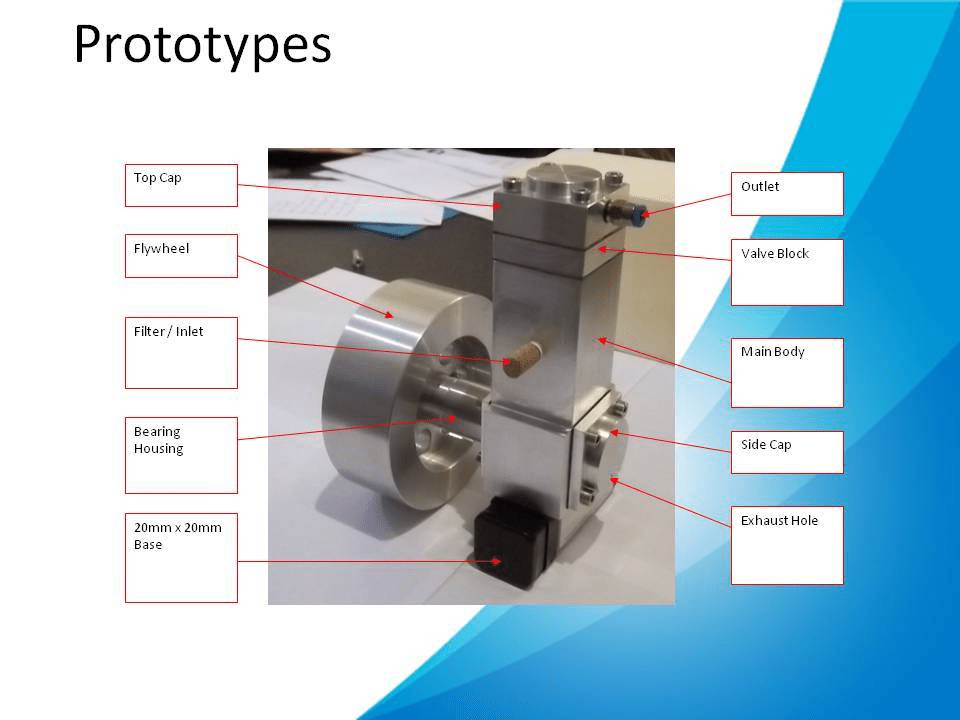


R&D Compressed Air Engine to Produce Electrical Energy
Electrical Engineering Design Services
Figjam Engineering provides electrical engineering design services for industrial, commercial, and energy-led projects. Our work includes system architecture, compliance-driven calculations, integration planning, and detailed technical documentation.
3D CAD Modelling & Technical Drawings
Figjam Engineering provides 3D CAD modelling and detailed technical drawings to support concept development, prototyping, manufacturing, and installation. Our CAD output ensures accuracy, compliance, and efficient collaboration across engineering and production teams.
The Process

Our engineering design process supports mechanical, electrical, and CAD-led projects, ensuring compliant, efficient, and scalable outcomes for clients in Leicester and across the UK.
The process of bringing an idea to life is an intricate journey that begins with a spark of creativity. Whether it’s conceptualized on paper, realized through CAD programs, or cultivated in the depths of one’s imagination. Each idea holds the potential to transform into something tangible. Here at Figjam, we pride ourselves on our ability and expertise. We intricately engineer and design solutions that are tailored to fit seamlessly within their intended environment. This can be a physical product or an innovative service.
We specialize in offering expertise in NPI (New Product Introduction) or new to world products across a wide range of industries. Our focus lies in creating innovative 3D concepts, which are then meticulously developed, prototyped, manufactured, and skillfully installed following ISO 9001 and the machinery directive. This comprehensive approach ensures that we bring our clients’ vision to life while meeting their exact specifications and requirements.
For any new to world or NPI / NPD projects our approach is the following but not limited to:

If you want to learn about our collaboration opportunities, please reach out. We can streamline your design process via a bespoke NPI process. It doesn’t matter how big or small your project is. We invite you to contact us here to explore the possibilities.
Corporate Case Study
This corporate case study demonstrates how Figjam Engineering applies its engineering design services across mechanical, electrical, and CAD-led projects to deliver compliant, efficient, and commercially viable outcomes.
Company X had a stage gate process that was elaborate. Tasks kept on being added to each section of the system. This ultimately blurred the lines as to where each stage was defined and for what type of project.
We took the existing stage gate and looked at a project and started to define it further. We defined its complexity to give the stage gate a 2 stage 3 stage or 5 stage process. We then examined the standards it needed to adhere to. We also considered the company’s strategy to implement ISO9001 standard.
In this case the project needed to follow simply the Machinery Directive Annex 7 in order to implement ISO9001. We assigned sections of the projects, such as feasibility, and gave these specific tasks. This ensured thorough completion. It enabled moving onto the development gate. Then repeated this for the development stage to enable qualification gate. Each stage had its own financial metrics. These metrics accompany the process viability with Net present value (NPV) and Internal Rate of Return (IRR). This helped us move through the next stage gate. It also allowed us to understand where costs were absorbed in each stages and as a whole. This understanding ensured the project could continue, shut down, or renegotiate.
We set up all tasks for each stage gate. This reduced what initially cost Company X 12 months to complete a project down to 3 months. This applied to all types of an equivalent project within the company. This change maximized project process efficiency by 75%.
Company X still follows this process to this day.